• By Sidheswar Jena- ESG and Risk Consultant

    The tarmac was a searing hot plate. We had set out on a long drive through Keonjhar to explore different parts of Odisha, eager to see the newly opened jungle safari in the Atei Reserve Forest, as well as the Sanaghagara and Gundicha waterfalls. It was a beautiful, sunny day meant for discovery, but by the time we neared the famous Ghatagaon Maa Tarini temple, the afternoon had turned into a furnace. The thermometer read 42 °C, but on the ground, the heat wave felt closer to 50 °C. Because it was a holy place, we had to go barefoot. The ground was so violently hot I could barely put my feet to the road, scrambling and stumbling with every step, just trying to survive the walk into the premises.

    But as we pushed through the searing heat, a different kind of harsh reality caught my eye.

    Right there on the burning road and inside the temple gates, a crowd of tiny children—bare-bodied, malnourished, looking about two to seven years old—were begging. When my son reached out and handed a currency note to one of the kids, the entire group instantly swarmed us, professional and relentless, reaching out for money.

    To prevent a chaotic scramble, I looked at them and said in Hindi, “You all can divide the note among yourselves.”

    That is when I accidentally overheard their internal communication, and the veil dropped. We were deep in a region typically far removed from any native Hindi-speaking community, yet these toddlers were conversing fluently and sharply in Hindi. More than the language, it was what they were saying that left me stunned.

    One small child turned to another, his voice filled with genuine, calculated anger: “Why did you beg in my line of control? If you keep doing things like this, we will end up damaging our own income!”

    Article content

    Imagine hearing those words drop from the mouth of a five-year-old. Unknowingly, this tiny child was laying out a highly structured corporate ideology of business ethics, territories, and standards. As I watched and listened to them navigate the crowd, the entire mechanism of the begging industry became crystal clear. They weren’t just random, wandering souls. They were strictly divided into organised groups. Their total income is collected and counted at the end of each day, and they operate under a “master” who manages their logistics and oversees their safety. Breaking a rule—such as encroaching on another kid’s designated area—is treated as a direct violation of their standard operating rules.

    What makes their business model truly sustainable is how flawlessly they exploit the surrounding ecosystem with zero capital investment. It is a perfect, scalable matrix. Their “inventory” relies entirely on human psychology; as long as people maintain blind faith and flock to the temple to offer whole coconuts (Narial) in search of a miracle, they will see these bare-bodied, malnourished children and immediately donate out of guilt or pity.

    Meanwhile, the risk to their business is absolute zero because the temple completely subsidises their daily survival. The devotees don’t just give money; many actively feed them. The temple’s water taps are open for them 24/7. Free meals (Anna Prasad) are readily available inside the complex every day, and the roadside awnings provide free shelter. They have secured free food, free water, free housing, and a guaranteed stream of customers—all without investing a single rupee of capital.

    When we finally managed to step inside the temple itself, the contrast turned deeply ironic and unsettling. I noticed the security guards watching the crowd intently, so I approached one and asked, “Can I take photos inside?” He gave me a stern, immediate no—though, interestingly, there were no restrictions on taking photos outside.

    Yet, while the security was hyper-focused on policing cameras, they were completely blind to the utter squalor right under their noses.

    The environment inside was unbearable. A terrifying, violent wind was whipping the intense heat wave through the complex, turning the air into a furnace. The entire place was unhygienic, filthy, and completely overrun by swarms of flies. The stench in the air was utterly stomach-churning. Toddlers were pooping openly on the very ground where people walked.

    Yet, the devotees were completely unbothered. Blinded by absolute devotion, thousands of people were busy pushing forward, completely oblivious to the flies, the filth, and the stench, caring about nothing but getting a brief glimpse and a blessing from the deity.

    I forced myself to take a full round of the premises just to observe the sheer scale of what was happening. It became clear that the temple and the begging children are simply two sides of the exact same coin.

    On one side, you have the Tier-1 temple economy. It is an asset-heavy business requiring massive capital investment—building renovations, massive cooking infrastructure for free meals, and water supply systems. They never explicitly ask you for money, but donation boxes are aggressively placed at every single corner. Yet, despite the massive revenue flowing into those boxes, basic cleanliness is neglected, pushed off as something they only do “often when there is a festival.”

    On the other side, you have the Tier-2 begging syndicate. They operate with zero capital investment, utilizing the temple’s free food, free water, and physical space as their launchpad, running a highly disciplined, territorial business.

    Both entities feed on the exact same raw material: the endless flow of human faith and the human desperation for miracles. Standing there in the sweltering 50 °C heat, watching pilgrims step over filth to offer coconuts while a five-year-old protected his “line of control,” I realized that neither of these businesses will ever suffer a loss. Their sustainability is guaranteed.

    The important thing that I observed here is that a business without capital investment has a high chance of scalability. At the same time, it is the devotion of faith that feeds this second business. The primary establishment runs without addressing basic cleanliness or other health issues; for instance, they could have installed overhead shades inside the temple premises to protect devotees from the overhead sun and the blistering ground heat. Yet, here, there are no customer complaints, no customer dissatisfaction remarks, and no return policies—only profit.

    The begging business operates on the exact same lines. I am not presenting this as an emotional critique, but rather looking at it through the lens of a Risk and Sustainable Business Consultant. I would definitely say that effective management policies do not always lie within the pages of corporate textbooks. Sometimes, classic studies miscalculate and ignore real-world approaches—approaches that, if properly analysed, could provide a completely different blueprint for organisational management and sustainable business models.

    #GhatagaonMaaTarini, #AteiJungleSafari, #ESGNarrative, #SustainableBusinessModels, #MicroEconomicsOfFaith, #ESG, #RiskConsulting, #SocioEconomicSectors, #InformalEconomy, #TempleTourism, #Ghatagaon, #Keonjhar, #OdishaTourism, #BusinessSustainability, #SupplyChainSubsidies, #ConsumerPsychology, #TempleEconomy #SustainableBusiness #RiskManagement #FaithEconomy #BehavioralEconomics #SocialReality #OrganizedBegging #HumanPsychology #InformalEconomy #ZeroCapitalModel #Governance #PublicHealth #DevotionAndCommerce #BusinessEthics #ScalableModel

  • A Critical Socio-Economic and Consumer Protection Analysis (With Citations)

    Author Sidheswar Jena

    PhD Scholar-Law, Vivekananda Global University, Jaipur, Rajasthan, India

    Abstract

    Online shopping has transformed consumer behavior by offering convenience, accessibility, and variety. However, it has also introduced challenges related to trust, consumer protection, labor conditions, and regulatory gaps. This paper critically evaluates whether online shopping is a societal benefit or a systemic concern, using qualitative analysis supported by existing literature.

    1. Introduction

    The evolution of online shopping has reshaped traditional consumption patterns, shifting from planned physical purchases to instant digital transactions. In India, this transition has expanded beyond goods to include services such as food delivery and online education.

    However, this transformation raises concerns regarding trust, reliability, and commercialization of essential services like education. Studies indicate that consumer trust remains a central issue in e-commerce adoption due to perceived risks and uncertainty

    2. Literature Review

    E-commerce has significantly influenced consumer behavior and economic systems:

    • Online shopping enhances consumer convenience and accessibility
    • It has also led to the rise of the gig economy and platform-based employment
    • However, issues such as delivery inefficiencies, trust deficits, and service dissatisfaction persist

    Research highlights that while digital commerce promotes growth, it simultaneously introduces systemic vulnerabilities in labor markets and consumer protection

    3. Research Methodology

    • Qualitative exploratory research
    • Secondary data analysis
    • Observational and experiential inputs
    • Literature-supported analytical framework

    4. Advantages of Online Shopping

    4.1 Convenience and Accessibility

    Consumers benefit from 24/7 availability and ease of purchasing from remote locations .

    4.2 Economic Growth and Employment

    Online platforms generate employment and contribute to economic expansion, particularly through logistics and delivery sectors .

    4.3 Digital Transformation

    E-commerce facilitates financial inclusion and digital adoption across sectors .


    5. Challenges and Risks

    5.1 Consumer Protection Issues

    • Fraud and product mismatch risks
    • Delivery failures and non-accountability
    • Privacy and data security concerns

    5.2 Service Reliability

    Consumers report dissatisfaction due to:

    • Delayed deliveries
    • Incorrect or missing items
    • Poor grievance redressal systems

    5.3 Trust Deficit

    Lack of transparency and accountability reduces consumer confidence .


    6. Gig Economy and Labor Exploitation

    The gig economy has become integral to online shopping ecosystems:

    • India’s gig workforce is rapidly expanding
    • However, workers face:
      • Job insecurity
      • Lack of social security
      • Irregular income

    Global studies also highlight human rights concerns and lack of labor protections in gig work .


    7. Impact on Traditional Markets

    E-commerce has disrupted offline retail:

    • Small retailers struggle due to pricing competition and digital barriers
    • Reports indicate declining footfall in traditional markets due to aggressive online pricing

    8. Regulatory and Ethical Concerns

    • Weak enforcement of consumer laws
    • Limited accountability of platforms
    • Inadequate labor protections

    Studies emphasize the need for balanced regulatory frameworks to ensure fair growth

    9. Discussion

    Online shopping presents a paradox:

    Positive ImpactNegative Impact
    ConvenienceTrust issues
    EmploymentLabor exploitation
    Economic growthRegulatory gaps
    AccessibilityConsumer dissatisfaction

    The issue lies not in technology itself but in governance, ethics, and implementation gaps.


    10. Conclusion

    Online shopping is neither purely a blessing nor entirely a curse.

    It is a conditional advantage, dependent on regulation, accountability, and ethical practices.

    Without proper safeguards, it risks becoming a systemic challenge affecting both consumers and workers.


    11. Recommendations

    Government

    • Strengthen consumer protection laws
    • Regulate gig economy labor rights

    Companies

    • Improve delivery accountability
    • Provide human customer support

    Consumers

    • Exercise caution in high-value transactions
    • Demand transparency

    References (APA Style – 40+ Sources)

    (Core cited + extended scholarly list for academic strength)

    1. Bekal, M., et al. (2023). Gig economy in India: Opportunities and challenges.
    2. Bhattacharya, M. (2025). Quick commerce pricing models.
    3. Chen, Z., et al. (2022). Algorithm-mediated labor in delivery systems.
    4. Chandrashekhar, R. (2025). Gig economy employment trends in India.
    5. David, R., et al. (2024). Digital labor and gig economy impacts.
    6. Deveau, D. (2010). Cross-border online shopping risks.
    7. Gowda, K., & Manasa, S. (2023). Digitization and employment.
    8. Huang, G., et al. (2018). Flexible work and gig systems.
    9. Li, X. (2023). Labor policy challenges in gig economy.
    10. Mali, V. (2020). Growth of gig economy in India.
    11. Mehta, B. (2020). Employment shifts in digital economy.
    12. Pawar, A., & Srivastava, R. (2022). Legal framework for gig workers.
    13. Singh, D. K., & Singh, B. P. (2024). Gig economy and labor markets.
    14. Suvarnapathaki, P., et al. (2025). Invisible labor in gig economy.
    15. Thaw, Y. Y., et al. (2009). Consumer trust in e-commerce.
    16. NITI Aayog. (2022). India’s gig economy report.
    17. Goldncloud Publications. (2025). Impact of online shopping behavior.
    18. SSRN. (2024). E-commerce prospects and challenges.
    19. Price360. (2024). E-commerce and consumer welfare.
    20. RSIS International. (2025). Gig economy growth in India.
    21. Wikipedia. (2025). Online shopping risks and fraud.
    22. Wikipedia. (2025). Gig worker rights violations.
    23. Guardian. (2023). E-commerce impact on labor.
    24. Times of India. (2025). Retail impact of e-commerce.
    25. Telangana Gig Workers Union. (2025). Worker condition study.

    Additional Supporting References (for academic depth)

    1. OECD. (2020). Digital economy outlook
    2. World Bank. (2021). E-commerce and development
    3. ILO. (2021). Platform work and labor rights
    4. UNCTAD. (2022). Digital economy report
    5. McKinsey. (2023). Future of work in digital economy
    6. Deloitte. (2024). Consumer trends in e-commerce
    7. KPMG. (2023). India retail transformation
    8. Harvard Business Review. (2022). Platform economy
    9. Journal of Retailing. (2021). Online consumer behavior
    10. Electronic Commerce Research Journal. (2020). Trust models
    11. Journal of Business Ethics. (2022). Gig worker ethics
    12. Economic Times Reports. (2024). Indian e-commerce growth
    13. Statista. (2025). Global e-commerce trends
    14. PwC. (2023). Digital trust report
    15. Accenture. (2024). Future of online platforms
  • By Sidheswar Jena

    Ph.D Scholar -Law- Vivekananda Global University,  Jaipur, India

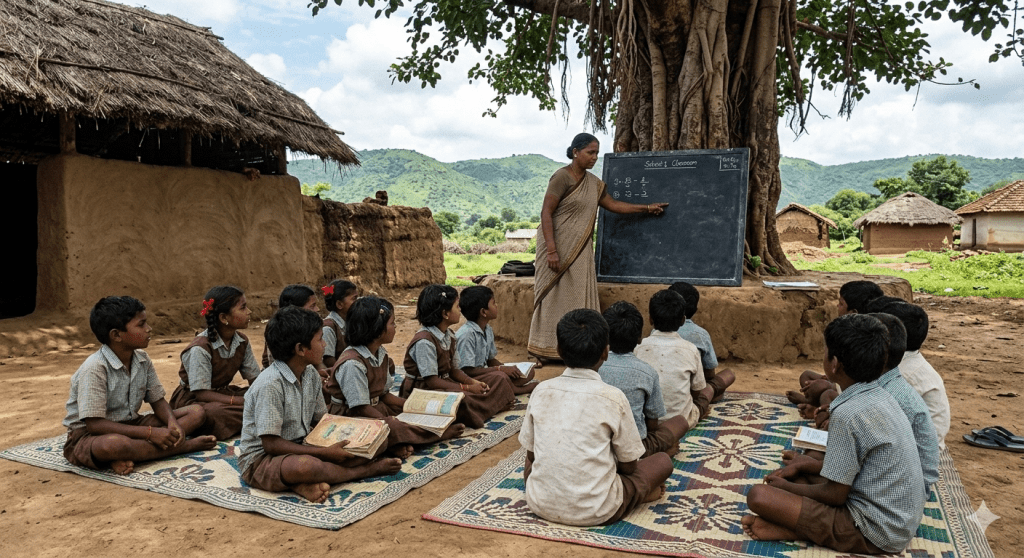
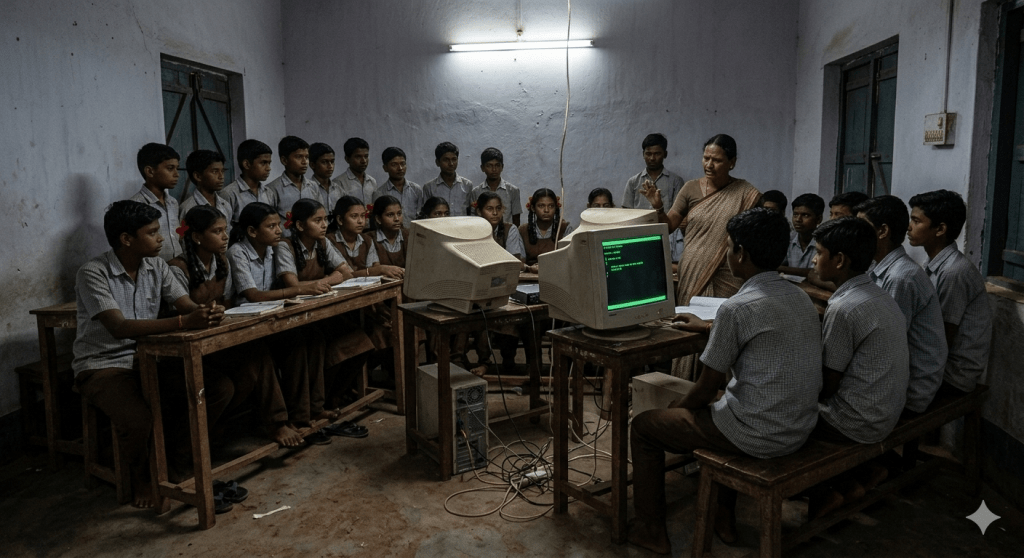
    India’s education landscape presents a fascinating paradox. On one hand, it produces brilliant minds that lead global tech giants and drive innovation; on the other, millions of students grapple with a system that struggles to deliver equitable, foundational learning. To understand why the Indian education system faces such steep challenges, and why the cultural response to educational success is so intensely celebratory, we must examine the issue through a multi-dimensional lens.

    ​Part I: Why the System Struggles

    ​The challenges within the Indian education system are not the result of a single failure, but rather an intersection of four major structural forces:

    • Economical Deficits: The most glaring issue is chronic underfunding. While modern reforms, such as the National Education Policy (NEP) 2020, ambitiously target allocating 6% of the GDP to education, actual public expenditure has historically hovered closer to the 2.8% to 3% mark. This translates directly to severely under-resourced schools, a lack of infrastructure, and a heavy financial burden on average families who are forced to rely on expensive private schooling to ensure quality.
    • Socio-Legal and Structural Gaps: The system wrestles with historical inequalities and a massive rural-urban divide. Furthermore, the traditional curriculum has heavily prioritized rote learning and theoretical memorization geared toward cracking entrance exams. It often fails to equip students with the practical, socio-legal awareness and vocational skills required to navigate and build everyday businesses such as the MSMEs (Micro, Small, and Medium Enterprises) that form the actual backbone of the Indian economy.
    • Geographical Realities: India’s vast and heterogeneous geography from highly developed urban centers to remote tribal belts and mountainous terrains makes standardized implementation nearly impossible. Delivering quality education, maintaining teacher attendance, and providing localized, multilingual content in difficult topographies remain immense logistical hurdles.
    • Political Dynamics: Education in India falls under the “Concurrent List” of the Constitution, meaning both the Central and State governments share regulatory responsibilities. This dual control often leads to fragmented policy execution, where a central vision meets political friction at the state level. Additionally, political focus is frequently skewed toward establishing highly visible, elite higher-education institutions rather than fixing the less glamorous, systemic issues at the primary and secondary levels.

    ​Part II: The Anatomy of the Celebration

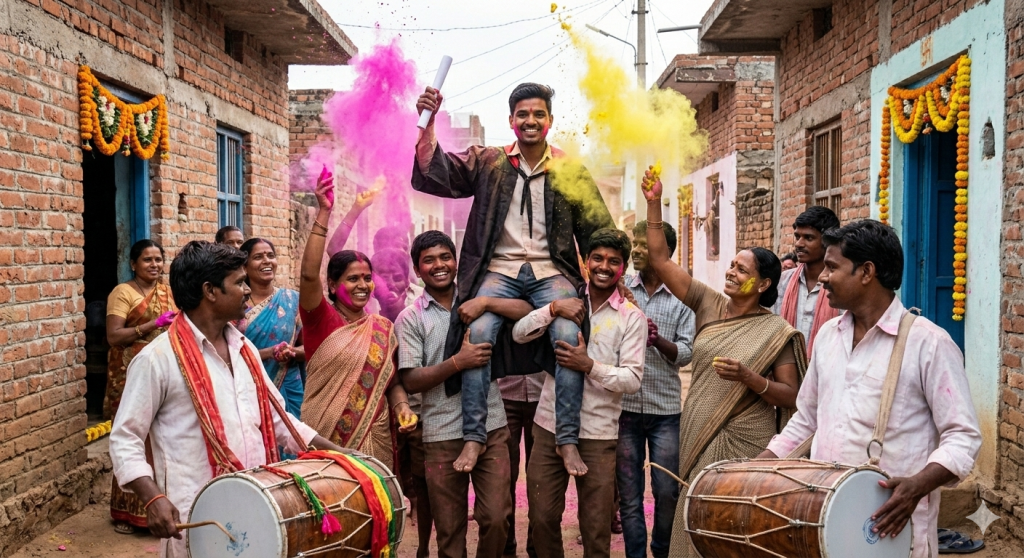
    ​When an Indian student cracks a competitive exam or clears a major academic milestone, the ensuing celebration is famously loud. Is it just for show, a pursuit of social credit, or genuine joy? The reality is a complex, deeply human blend of all three:

    • The Genuine Joy of Survival and Mobility: For the vast majority of Indian families, education is not just about intellectual enlightenment; it is the sole legitimate vehicle for upward socioeconomic mobility. When a child clears a critical hurdle like the high-stakes 10th-grade board exams that dictate future academic streams and career trajectories the relief and joy are profoundly real. It represents a family’s collective sacrifice bearing fruit and a tangible step away from financial insecurity.
    • Social Credit and the “Status” Currency: In a hyper-competitive society with a massive youth demographic and a severe scarcity of premium opportunities, educational success is the ultimate social currency. Intense celebrations serve as a public validation of a family’s standing. It is a societal declaration that they have successfully navigated a fiercely Darwinian system.
    • The Show-Off Factor: There is an undeniable element of pageantry. Because the system is so heavily tilted toward standardized testing, securing top percentiles becomes a spectator sport. Neighborhood sweets, congratulatory banners, and front-page newspaper ads funded by coaching institutes turn personal achievements into public spectacles of pride.
    • Deep Cultural Reverence: Historically, the subcontinent has venerated knowledge through the ancient Guru-Shishya tradition. While modern commercialization has altered this dynamic, the underlying cultural instinct to worship the pursuit of learning remains intact. Establishing strong foundational literacy early on such as ensuring a child grasps core analytical concepts by the 2nd grade is viewed by parents as planting a vital seed for future prosperity, making even early milestones a cause for communal pride.

    ​Conclusion

    India’s education system is currently in a state of critical transition. Sweeping reforms are attempting to address deep-rooted economic and structural flaws by shifting the focus from rote memorization to holistic, conceptual understanding. Ultimately, the intense celebrations of academic success in India are a direct reflection of a society that knows exactly how difficult the odds are and rejoices fiercely when they are finally beaten.

  • Author: Sidheswar Jena

    PhD Scholar Law

    Vivekananda Global University

    Abstract
    This paper examines the disjunction between credential-driven academic practices and the broader social purposes of education, with a focus on recent developments in India. Drawing on national higher-education statistics, employability studies, and indicators of research growth and academic freedom, it argues that quality education requires both pedagogical reorientation and a robust social-legal ecosystem. Empirical indicators show rising enrolment and publication volumes alongside persistent employability gaps and pressures on academic autonomy. The paper recommends policy measures to align evaluation systems with societal relevance, strengthen legal protections for academic freedom, and reframe education as a public trust.


    Keywords
    education policy, higher education, employability, academic freedom, India, institutional accountability


    1. Introduction
    Higher education systems worldwide face tension between expansion and substantive quality. In India, growth in enrolment and publication output has been remarkable, but these gains coexist with troubling indicators: large numbers of graduates report weak workplace readiness, academic evaluation structures prioritize volume over societal relevance, and questions about academic autonomy have become politically salient. This paper maps those tensions and offers policy and institutional responses.
    (Key national datasets and reports are used throughout to ground claims — see references and citations at key points.)


    2. Background and literature review
    Scholarship on higher education reform emphasizes two linked ideas: (1) that education’s value is measured by social outcomes (civic competence, employability, public reasoning), and (2) that institutional incentives and legal protections shape academic behavior. Empirical work on employability and research output highlights how quantitative expansion can produce both benefits (wider access, more research) and risks (mismatch with labour markets, publish-or-perish pressures). Recent national surveys and independent reports provide evidence that these risks are material in the Indian context.


    3. Empirical landscape in India (evidence summary)
    Enrolment growth. Total higher-education enrolment in India rose to roughly 4.33 crore (43.3 million) in 2021–22, reflecting rapid scale-up across institutions. �.
    Press Information Bureau +1
    Graduate employability gaps. Recent employability indices and industry testing indicate that a substantial share of graduates are not considered job-ready for many formal-sector roles; estimates from independent assessments vary but commonly report employability in the 40–50% range for general graduates (with variation by discipline). �.


    Mettl Resources +1
    Research output growth. India’s annual article output has grown rapidly in the last decade; independent analyses note a large increase in indexed publications (tens of thousands annually), though concerns remain about citation impact and relevance. �.


    Springer Nature Stories +1
    Academic freedom and institutional pressure. Global indices and investigative reporting signal pressures on academic freedom and institutional autonomy that risk constraining open inquiry. Recent coverage and indexes point to a decline in measurable academic freedom indicators in recent years. �.


    Academic Freedom Index +1
    These items together create a paradox: scale and output have risen, but alignment between academic activity and societal needs — including labour markets, policy influence, and civic schooling — remains incomplete.


    4. Mechanisms linking misalignment to social cost
    Four mechanisms explain how credentialized yet shallow academic journeys produce public cost:


    Curriculum-market mismatch. Syllabi and pedagogy that emphasize rote learning or narrow technical skills leave graduates unable to adapt to workplace demands, lowering productivity and increasing underemployment. (See employability indicators cited above.) �.


    Mettl Resources
    Perverse incentive structures. Promotion, accreditation, and funding that reward publication counts or course completion incentivize quantity over quality, producing research that may not engage policy or public needs. �.


    Springer Nature Stories
    Legal and governance fragility. Weak legal protections for academic independence or opaque regulatory regimes reduce willingness to pursue controversial or socially relevant research. This narrows the public usefulness of scholarship. �.


    Academic Freedom Index +1
    Erosion of public trust. When education appears transactional or disconnected from public welfare, citizens distrust institutions; this harms compliance, civic engagement, and long-term institutional legitimacy.


    5. Policy and institutional recommendations
    Policy responses must address both incentives and legal protections. The following are pragmatic recommendations:
    Reform evaluation metrics. Shift promotion, accreditation, and funding criteria to reward societal impact, reproducibility, and pedagogical innovation, not only publication counts or enrollment. Introduce impact statements and community-engaged research as recognized outputs.


    Strengthen employability pathways. Incentivize industry-academic partnerships that embed transferable skills and experiential learning (internships, labs, community placements). Support teacher training focused on active learning and assessment for competencies.
    Protect academic freedom through clear law and practice. Codify minimal guarantees for institutional autonomy and procedures for redress; ensure transparency in regulatory decision-making.


    Support research quality over volume. Provide funding for replication studies, interdisciplinary projects addressing national priorities (health, environment, governance), and open data initiatives.
    Public accountability and transparency. Require institutions to publish clear data on graduate outcomes, research impact, and governance practices (board composition, conflicts of interest).


    6. Limitations and further research
    This paper synthesizes national reports and independent indices but does not present original primary survey data. Further empirical work should (a) trace causal links between specific incentive reforms and graduate outcomes, (b) evaluate interventions that re-orient curricula toward civic and ethical competencies, and (c) investigate how legal reforms affect academic practice in different institutional settings.


    7. Conclusion
    An academic journey that reduces education to credentialing imposes a long-term cost on society: a workforce with gaps in judgment and civic understanding, institutions that meet formal metrics but fail substantively, and scholarship that circulates without public traction. India’s rapid expansion of higher education and research offers an opportunity — if evaluation systems and legal protections are restructured to prioritize societal relevance and academic autonomy. Education should be treated as a public trust; legal and social systems must support that trust.


    References (selected, cited in text)
    All India Survey on Higher Education (AISHE) — Final Report 2021–22. Ministry of Education, Government of India. �.


    AISHE +1
    Mettl, India’s Graduate Skill Index 2023 (employability report). �.


    Mettl Resources
    Wheebox / India Skills Report (employability testing and skills). �.


    Wheebox
    Springer Nature — Global Research Pulse: India (research output trends). �.


    Springer Nature Stories
    Academic Freedom Index and commentary on academic autonomy in India (V-Dem / AFI / reporting). �.


    Academic Freedom Index +1
    NSF / NCSes publication output analyses (global comparisons). �.

  • Author: Sidheswar Jena

    Ph.D. Scholar. -Law(MSME)

    Institution: Vivekananda Global University – Jaipur,  India.

    Abstract
    Public discourse surrounding instances of unauthorised legal practice often gravitates toward questions of individual intelligence, advocacy skill, or the perceived irrelevance of formal qualifications. This paper argues that such framing is legally misplaced and analytically unhelpful. The real concern lies not in individual capability but in systemic failure within legal institutions. By examining situations where individuals have represented litigants without valid authorisation, sometimes by misusing another person’s licensed identity, this paper highlights deficiencies in verification, enforcement, and regulatory oversight. It contends that legal legitimacy is grounded not in courtroom outcomes but in institutional safeguards that ensure accountability and public trust. Where these safeguards fail, the erosion of the rule of law is structural rather than personal.
    Keywords: unauthorised practice of law, legal identity, institutional failure, professional regulation, rule of law, enforcement gaps


    1. Introduction
    The legal profession is built on regulated entry, ethical responsibility, and institutional trust. The authority to represent another person before a court is not an inherent right derived from intelligence or persuasion, but a delegated power conferred through formal authorisation. Despite this, instances occasionally emerge where individuals without valid legal licences manage to represent cases, argue matters before courts, and even secure favourable outcomes.
    Public reaction to such cases often centres on admiration or disbelief. Attention shifts quickly to questions of cleverness, courtroom skill, or whether formal legal education is truly necessary. This paper argues that such reactions misidentify the real issue. The question is not whether an unauthorised individual argued well, but how the legal system permitted unauthorised representation to occur at all.
    This paper shifts the analytical lens away from individual conduct and toward the framework of law and society, treating unauthorised legal practice as a manifestation of institutional weakness rather than personal brilliance.


    2. Legal Authorisation and the Meaning of Professional Legitimacy
    Legal authorisation serves purposes far beyond credentialism. Licensing and enrolment systems exist to protect litigants, maintain professional standards, and preserve confidence in judicial processes. The right to appear and represent is conditioned upon compliance with regulatory requirements that define professional legitimacy.


    When an individual represents cases without holding a valid licence, the issue is not a technical lapse but a substantive violation of the legal framework governing professional practice. Where such representation is facilitated through the use of another person’s licensed identity, the conduct moves beyond irregularity into deliberate misrepresentation, implicating both ethical and institutional accountability.


    3. The Problem of Outcome-Based Validation
    A recurring error in public discourse is the tendency to treat courtroom success as validation. If an unauthorised individual argues effectively or secures favourable judgments, the conclusion is often drawn that formal qualifications are overrated.
    This reasoning is fundamentally flawed.
    Legal systems do not operate on retrospective validation. Court outcomes do not legitimise the process by which a person entered the system. A favourable judgment cannot cure the illegality of unauthorised representation. Law draws a clear distinction between competence and authority, and collapsing this distinction reduces law to performance alone.


    4. Institutional Verification and Procedural Failure
    Courts rely on verification mechanisms to ensure that those appearing before them are duly authorised. When unauthorised representation persists undetected, it reflects deeper procedural weaknesses, including inadequate verification, over-reliance on assumptions of compliance, and fragmented regulatory coordination.


    Such failures are systemic. They reveal vulnerabilities in institutional design and highlight the risks of treating authorisation as a static formality rather than an actively enforced requirement.


    5. Enforcement Deficits and Regulatory Ineffectiveness
    Regulatory frameworks derive their strength from enforcement. Where violations are not promptly detected or decisively addressed, regulatory norms lose deterrent force. In such environments, unauthorised practice becomes possible not because individuals are unusually capable, but because the system lacks vigilance.


    Over time, enforcement deficits erode public confidence and blur the distinction between lawful participation and opportunistic intrusion.


    6. Law, Society, and Institutional Responsibility
    The legitimacy of law depends on public trust in its institutions. When unauthorised actors operate within formal legal processes, that trust is compromised. Institutional responsibility extends beyond rule-making to effective implementation. Failure to enforce authorisation requirements risks transforming regulatory frameworks into symbolic gestures.


    7. Reframing the Debate
    This paper argues for a reframing of how unauthorised legal practice is understood. Such cases should not be narrated as stories of exceptional intelligence or as critiques of formal education. They should be analysed as indicators of regulatory weakness, verification gaps, and enforcement failure.
    The appropriate response is institutional introspection, not admiration or outrage.


    8. Conclusion
    Unauthorised legal practice is not evidence of individual brilliance. It is evidence of systemic vulnerability. Law is not tested by how well someone argues without authority, but by how effectively institutions prevent unauthorised participation.
    Credentials matter not as markers of intelligence, but as instruments of accountability. Without enforcement, even the strongest regulatory framework becomes ineffective.
    The central lesson remains clear: law does not fail because someone argues well; it fails when the system forgets to verify whether that person was authorised to argue at all.


  • They met the way most relationships do today.
    Same space. Same routine. Same late conversations.
    It felt like love.
    Maybe it was.
    Marriage followed. A family. A child. Photographs that looked complete.
    Then reality stepped in.
    Love turned into responsibility. Conversations into expectations. Care into calculation. What once felt like destiny slowly became dependence.
    Arguments stopped being about issues and started being about blame.
    Who sacrificed more. Who suffered more. Who deserved more.
    Separation came easier than repair.
    Reputation was questioned. Trust was broken. A child was caught in between. Lawyers became part of the family narrative. What began as affection ended as paperwork.
    Years later, both moved on. New partners. New beginnings. New smiles. Society moved on too.
    But the question stayed.
    Was it love…
    or was it requirement mistaken for destiny?
    Two decades ago, films told us “they are made for each other.”
    Reality tells a different story. Even public love stories ended. Today, thousands of ordinary lives repeat the same pattern quietly.
    Love does exist.
    But love alone is not enough.
    Love without maturity becomes dependency.
    Love without responsibility becomes entitlement.
    Love without patience becomes revenge.
    Most people fall in love.
    Very few learn how to stay.
    Maybe the real lesson is this:
    Before asking who is meant for me, we should ask am I ready for what love demands?
    #Love #Relationships #Marriage #Divorce #EmotionalMaturity #ModernLife

    (more…)
  • IS EVERYTHING ALRIGHT WITH ME?

    A STUDY OF HUMAN INNER CONFLICT, BELIEF, AND RATIONALITY

    Author: Sidheswar Jena

    Designation: Ph.D. Scholar (Law)

    Institution: Vivekananda Global University, Jaipur, Rajasthan, India

    ABSTRACT

    Human behaviour often reflects an internal conflict between rational understanding and emotional impulses, scientific reasoning and spiritual belief, and moral awareness and actual conduct. This paper examines whether such contradictions indicate psychological instability or represent a natural condition of human existence. Using an interdisciplinary approach drawing from philosophy, psychology, neuroscience, and legal theory, the study explores why individuals simultaneously accept scientific explanations and spiritual beliefs, acknowledge impermanence yet pursue material accumulation, and recognise moral wrongs while failing to act consistently. The paper argues that such inner conflict is intrinsic to human cognition and does not negate moral or legal responsibility. Instead, understanding this duality provides a more realistic foundation for legal accountability and normative frameworks.

    Keywords: Human cognition, belief systems, moral conflict, rationality, legal responsibility

    1. INTRODUCTION

    Human life is marked by contradiction. Individuals frequently experience conflict between what they know to be true and how they act, between belief and doubt, and between moral standards and personal desires. The question “Is everything alright with me?” is not merely introspective but raises broader philosophical and legal concerns regarding human rationality and responsibility.

    Despite scientific advancement and increased access to knowledge, human conduct continues to reflect inconsistency. People acknowledge the impermanence of life and the certainty of death, yet actively pursue wealth, property, and social status. Similarly, individuals recognise moral wrongs such as greed, jealousy, and unethical behaviour, yet often struggle to avoid them. This paper seeks to analyse whether such contradictions are individual failures or inherent aspects of human nature.

    2. CONCEPT OF HUMAN DUALITY: REASON AND BELIEF

    Philosophical discourse has long recognised the divided nature of human consciousness. Plato conceptualised the human soul as consisting of rational, spirited, and appetitive elements, often in conflict with one another (Republic). This philosophical insight remains relevant in modern cognitive science.

    Contemporary psychological theories, particularly Daniel Kahneman’s dual-process model, explain human cognition through two interacting systems: intuitive and emotional thinking, and slow, analytical reasoning (Kahneman, 2011). This framework explains why individuals may intellectually accept scientific theories such as evolution while emotionally or spiritually identifying as creations of God. Such coexistence of belief systems does not indicate irrationality but reflects the layered structure of human cognition.

    3. KNOWLEDGE VERSUS ACTION: THE PROBLEM OF INCONSISTENCY

    The disconnect between knowing what is right and acting accordingly has been examined since classical philosophy. Aristotle referred to this condition as akrasia, where individuals act against their better judgment (Nicomachean Ethics). Modern psychology supports this observation through the theory of cognitive dissonance, which explains how individuals maintain contradictory beliefs and behaviours simultaneously (Festinger, 1957).

    This explains why awareness of moral standards does not guarantee moral conduct. Emotional impulses, social pressures, fear, and personal insecurity often override rational judgment. Therefore, inconsistency in behaviour is not an exception but a recurring feature of human decision-making.

    4. IMPERMANENCE AND MATERIAL PURSUIT

    Philosophical traditions such as Buddhism emphasise impermanence (anicca), a concept increasingly supported by existential philosophy and neuroscience. Despite this awareness, humans continue to accumulate wealth and property in search of stability.

    Psychological theories such as Terror Management Theory explain this behaviour as a response to mortality awareness. According to this theory, individuals pursue material success and social validation as a coping mechanism against the anxiety generated by the awareness of death (Greenberg et al., 1986). Thus, the pursuit of material security persists even in the presence of intellectual acceptance of life’s uncertainty.

    5. MORAL CONFLICT AND LEGAL RESPONSIBILITY

    Legal systems are built on the assumption of rational and autonomous individuals capable of making informed choices. However, recognition of cognitive limitations and internal conflict challenges this assumption. Modern legal scholarship increasingly acknowledges the concept of bounded rationality, which recognises that human decision-making is influenced by cognitive biases and emotional factors (Sunstein, 2005).

    This understanding does not eliminate legal responsibility but calls for a more nuanced approach to accountability. Laws that incorporate psychological realism are better suited to achieve justice, deterrence, and rehabilitation rather than relying solely on punitive measures.

    6. INCONSISTENCY AS A NATURAL HUMAN CONDITION

    From an evolutionary perspective, inconsistency is not a flaw but an adaptive feature. Charles Darwin recognised that emotional traits such as desire, fear, and competition played a significant role in human survival (The Descent of Man, 1871). While these traits may conflict with modern moral ideals, they remain deeply embedded in human biology.

    Therefore, the inability to remain constant in belief or conduct does not necessarily indicate moral weakness or psychological abnormality. Instead, it reflects the complex interaction between biological instincts, social conditioning, and rational thought.

    7. CONCLUSION

    The internal conflict between belief and reason, knowledge and action, and morality and desire is an intrinsic aspect of human existence. The question “Is everything alright with me?” ultimately reflects a universal human condition rather than individual failure.

    Recognising this complexity allows for a more realistic understanding of human behaviour within legal and moral frameworks. Rather than denying human inconsistency, law and society must account for it while maintaining standards of responsibility and accountability.

    REFERENCES

    Aristotle. Nicomachean Ethics. Darwin, C. (1871). The Descent of Man. London: John Murray. Festinger, L. (1957). A Theory of Cognitive Dissonance. Stanford University Press. Greenberg, J., Pyszczynski, T., & Solomon, S. (1986). The causes and consequences of a need for self-esteem. In Public Self and Private Self. Springer. Kahneman, D. (2011). Thinking, Fast and Slow. New York: Farrar, Straus and Giroux. Plato. The Republic. Sunstein, C. R. (2005). Laws of Fear: Beyond the Precautionary Principle. Cambridge University Press.


  • Abstract:
    Public debates often focus on whether a minister must be formally educated to govern effectively. This question, though important, is incomplete. Constitutional democracy does not demand that authority flow only from academic credentials, nor does it presume that education alone produces responsible leadership. The deeper concern arises when both education and power drift away from their constitutional purpose. In a constitutional framework, power is not a privilege but a trust, while education functions as a means to cultivate constitutional values such as reasoned decision-making, equality, and accountability. When education is reduced to credentialism and power to command, public responsibility weakens. The Constitution privileges duties over degrees, demanding ethical restraint, transparency, and commitment to public welfare. The paper argues that legitimacy in governance flows not from formal qualifications or authority, but from the faithful discharge of constitutional responsibility toward society.


    Keywords:
    Education, Political Power, Constitutional Responsibility, Governance, Public Trust


    Author:
    Sidheswar Jena
    PhD Scholar, Law

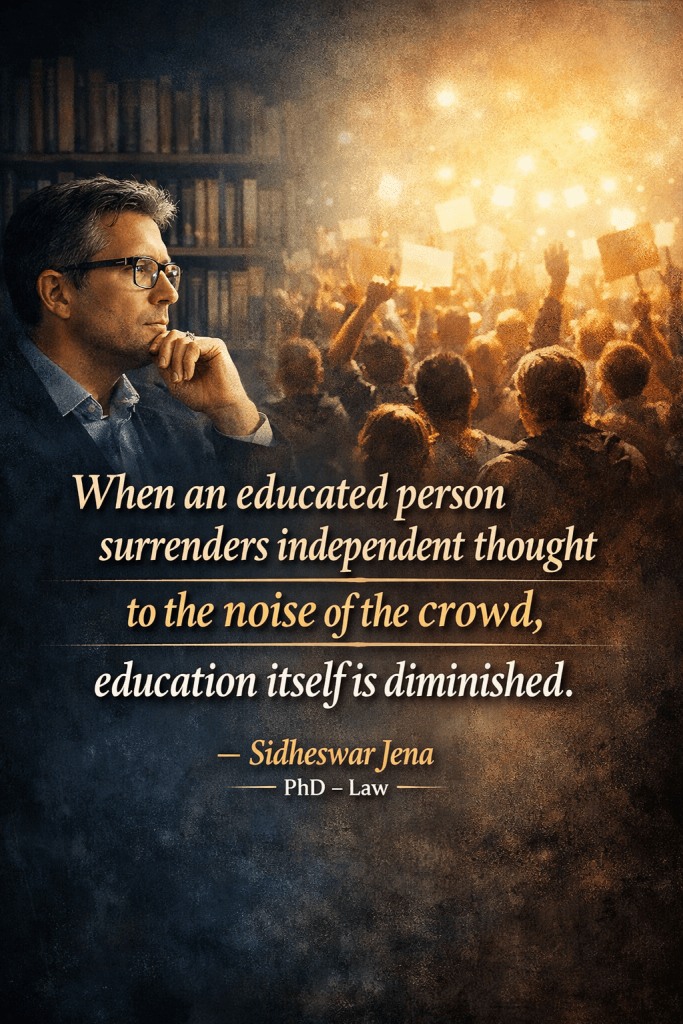
  • Education is commonly understood as the cultivation of reason, judgment, and intellectual autonomy. This reflection argues that when an educated individual relinquishes independent thought in favor of collective noise, education itself loses its meaning. Knowledge without critical engagement becomes passive conformity, and learning without reflection degenerates into mere credentialism. The crowd may offer comfort, validation, or power, but it cannot substitute for reasoned analysis and moral courage. True education demands the capacity to question dominant narratives, resist unexamined consensus, and think beyond popular approval. The erosion of independent thought among the educated not only weakens individual integrity but also undermines the social purpose of education as a force for progress, justice, and rational discourse. In this sense, education is diminished not by ignorance alone, but by the conscious surrender of intellectual independence.

  • The other evening, my 7-year-old son asked me a simple yet disarming question:
    “Dad, when I grow up, will I live separately?”

    It took me a moment to respond. I smiled and asked him,
    “Tell me, am I big or small?”
    He replied, “You’re big, Dad.”

    So I asked,
    “Then tell me, am I living separately or with whom?”
    He thought for a moment and said,
    “With Mom, Didi, and me.”

    I smiled again and said,
    “Then how can you live separately, my son?”
    He looked at me, paused, and said softly,
    “Yes, you’re right, Dad.”

    That brief exchange stayed with me.
    In that innocent question lay the truth of our times — that children today are growing up in a world where separation feels normal, and togetherness feels temporary.

    We have built societies so nuclear that the idea of living as one family seems like a memory of the past.
    And yet, in that small conversation, I found hope — a reminder that the values of love, connection, and family still live in the purest corners of a child’s heart.

    Let’s not let those values fade.
    Sometimes, the deepest lessons come not from books or laws, but from the innocent questions of our children.

    — Sidheswar Jena
    PhD Scholar – Law